
Introduction
Technology plays an important role in helping businesses manage their daily operations. As companies grow, managing different departments such as sales, finance, inventory, human resources, and customer service becomes more challenging. Traditional methods and separate software applications can create communication gaps, duplicate work, and delays in business processes.
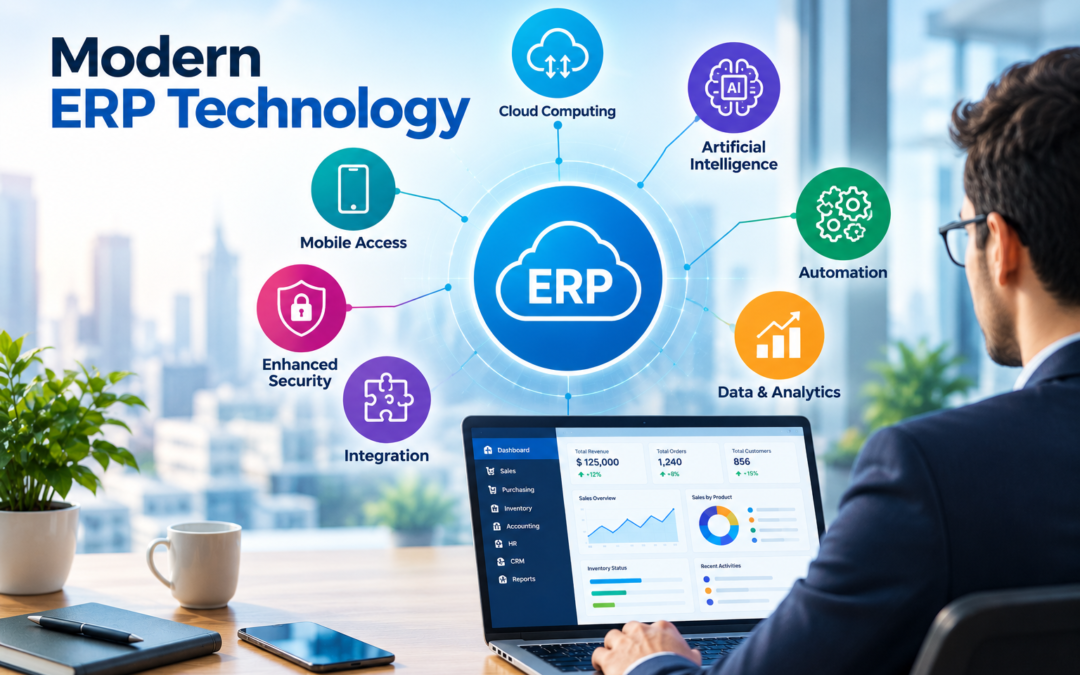
This is where Modern ERP Technology makes a difference. Enterprise Resource Planning (ERP) software helps businesses manage their operations through a single integrated system. It connects different departments, improves communication, and provides real-time business information.
With advanced technologies such as Artificial Intelligence (AI), cloud computing, automation, and data analytics, modern ERP systems are helping businesses become more productive and competitive.
What Is Modern ERP Technology?
Modern ERP Technology refers to advanced business management software that connects different business processes within one platform. It allows organizations to manage important activities, including accounting, sales, purchasing, inventory, employee management, and customer relationships.
Instead of using multiple disconnected applications, businesses can use one integrated ERP system to manage their information.
For example, when a customer places an order, the ERP system can update inventory, generate an invoice, and provide information to the relevant departments. This makes business operations faster and more organized.
1. Cloud-Based ERP Solutions
Cloud computing has changed how businesses use ERP software. Traditional ERP systems often require expensive hardware, servers, and regular maintenance.
Cloud-based ERP solutions allow businesses to access their software through the internet without maintaining complex infrastructure.
Benefits of cloud ERP include:
-
Access business information from anywhere.
-
Reduce hardware and maintenance costs.
-
Improve teamwork and collaboration.
-
Receive regular software updates.
-
Expand the system as business requirements grow.
Cloud ERP provides flexibility for businesses with multiple locations and remote employees.
2. Artificial Intelligence in ERP Systems
Artificial Intelligence is making ERP systems smarter and more efficient. AI-powered ERP solutions can analyze business information, identify patterns, and help managers make better decisions.
For example, AI can help businesses predict customer demand, forecast sales, monitor inventory, and identify unusual financial activities.
AI also reduces repetitive manual work by providing intelligent recommendations and automating routine activities.
By integrating AI into ERP systems, businesses can improve productivity and make decisions using valuable business insights.
3. Business Process Automation
Manual business activities can consume time and increase the possibility of errors. Modern ERP technology helps automate repetitive tasks such as invoice generation, purchase approvals, employee attendance, and inventory updates.
For example, when a business receives a new order, the ERP system can automatically update stock information and generate the required invoice.
Automation helps businesses save time, reduce manual errors, improve accuracy, and increase employee productivity.
4. Real-Time Data and Reporting
Accurate information is important for making the right business decisions. Modern ERP systems provide real-time dashboards and reports that help managers understand business performance.
Business owners can monitor sales, expenses, inventory, employee activities, and financial performance through a centralized dashboard.
This improves business visibility and allows managers to identify problems quickly.
Real-time reporting also helps organizations plan future activities and improve overall performance.
5. Integration with Other Business Applications
Modern businesses use different applications for accounting, marketing, customer management, online sales, and communication.
Modern ERP technology connects these applications to create a smooth flow of information.
For example, ERP integration with CRM and eCommerce platforms helps businesses manage customer information, sales orders, payments, and inventory from connected systems.
This reduces duplicate data entry and improves coordination between departments.
6. Improved Security and Data Management
Business information is valuable, and protecting it is essential. Modern ERP systems offer security features such as user access controls, encryption, authentication, and regular security updates.
These features help organizations protect sensitive information and prevent unauthorized access.
Businesses can also manage information centrally, making it easier to maintain accurate records and control access to important data.
Why Should Businesses Adopt Modern ERP Technology?
Modern ERP technology helps businesses simplify complex operations and improve productivity. It connects departments, automates repetitive activities, and provides accurate information for better decision-making.
Whether a business is small, medium-sized, or large, implementing the right ERP solution can support business growth and improve operational efficiency.
Conclusion
Modern ERP Technology is transforming the way businesses manage their operations. With cloud computing, Artificial Intelligence, automation, real-time reporting, and application integration, ERP systems are becoming essential tools for modern organizations.
At Fadel Software Solutions, we help businesses improve their operations through modern ERP solutions and Odoo services. Our goal is to simplify business processes, improve productivity, and support digital transformation.
Ready to upgrade your business with modern ERP technology? Contact FadelSoft and discover the right ERP solution for your business.